Don’t Play With Your Food
A while ago I mentioned that there was something called National Ice Cream for Breakfast Day. I have no problem with that and other than for some attentive parents, health advocates and people with dietary restrictions, I’m sure not many other people would object.
The only question really is what would be the best flavor. There has been a surprising amount of research done on the topic and almost 50% of people would choose vanilla, chocolate or strawberry as their favorite. After that choices really taper off through things like mint chocolate chip, rocky road, etc.
Apparently, however, ice cream companies have found that exotic flavors will also sell and there has been a bit of exploring to see what people will tolerate.
The envelope just got pushed by (spoiler alert) the Oscar Mayer company. Yes, they have come up with “hot dog flavored ice cream.”
According to the article I read, it “is called the Oscar Mayer Cold Dog and it “isn’t quite as unappetizing as it sounds on first blush.” And it’s not a frozen hot dog. It’s actually gelato with a hot dog flavor. A company like Oscar Mayer, purveyors of foods like hot dogs and baloney are no strangers to putting chemicals in their food, so it’s possible to make gelato have the “familiar and delicious notes of Oscar Mayer’s hickory-smoked hot dogs, tomato, onion and more” without the benefit of those actual foods being present.
A plain hot dog would be boring, so the Cold Dog has a “mustard swirl” made of white chocolate with yellow food coloring. Oscar Mayer warns, however, that those hoping for mustard flavor will be disappointed. The swirl is solely there to “reinforce the image of a hot dog, while keeping the classic hot dog flavor front and center.”
How can anyone take this seriously enough to worry about the “classic hot dog flavor?”
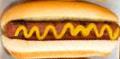
The idea came about when the company posted the idea on Twitter (where else) and asked their followers if the idea was “stupid,” or “genius.” The consensus was “genius,” and the Cold Dog was born.
In case I’ve whet your appetite and you are wondering where you can sample a Cold Dog, the answer is that it’s not likely. They are only available for a limited time at a shop called Popbar, who are the people who actually make the Cold Dogs and Popbars are only in a few American cities. If you live in New York City, you may be able to snag a Cold Dog from the Oscar Mayer “Weinermobile,” which is being reflagged with a paint job to look like it just came out of the freezer.
What’s a Weinermobile you ask? I would provide a photo but would probably get in some sort of intellectual [sic] property trouble. If you really need to know, you can Google it and then think about how terrifying it must look when reversing. In fact, please do Google it here: https://www.oscarmayer.com/wienermobile And scroll to the bottom to learn how to be a “Hotdogger,” one of the Weinermobile crew. It doesn’t say how much they pay.
By the way, this isn’t the first time Oscar Mayer has made a foray outside of processed food products. Earlier this year, they came out with the “Bologna Sheet Mask” which is a face mask that looks like a slice of bologna with holes for your eyes that look like they were bitten out (why not?).
The masks were sold on Amazon ($4.99) and sold out within hours (and don’t bother to check, they are out of stock indefinitely). The packaging actually looks like a pack of bologna and says “Oscar Mayer Face Mask/Beauty Inspired by Bologna.”
And of course “Do Not Eat Bologna Masks” in big letters.
Why is this happening?
Sweet Dreams!
I don’t know about you but I’m having way too many WTF moments when reading the news these days. A charitable interpretation would be that 24×7 news coverage forces news providers to dig deep to find new things to talk about so some of the stuff they trawl up is questionable. But I think the real explanation is that the human race has pretty well self-lobotomized itself and that Bob Dylan was spot on when he said, “We’re idiots, babe. It’s a wonder we can even feed ourselves.”
What makes me say that, you ask?
Actually the observation about self-feeding is a nice segue to the answer. Think of the things that pretty much come naturally to us and that we really don’t have to learn. Things like breathing, eating, crapping and—sleeping.
I know there are a lot of people who have real problems with sleep for various reasons, but for most of us, sleep comes pretty naturally. Think about the number of times you’ve had to fight to stay awake.

But the reality is that most people who claim to be sleep deprived could solve their problems by getting their phones and TVs out of the bedroom.
With that background, I invite you to consider the new vacation trend I just heard about—sleep tourism.
Apparently, hotels and resorts are now providing sound proof rooms and meditation/relaxation apps to help people sleep. Of course you pay for the service and there are even places that have multi-night sleep restoration packages.
So why has sleep suddenly become such a big focus for the travel industry? It only gets dumb and dumber. The theory is that people book hotel rooms to sleep in them. But the hotel industry has historically “focused on things that detract from sleep.” Of course—eating big meals, staying out late and all the things a normal human does on “vacation.”
Because people aren’t sleeping in their hotel rooms, the result, according to the research, is that people come back from vacation sleep deprived. That conclusion required research? I knew that years ago when everyone would come back from vacation and say they needed a vacation to recover from vacation.
The leap of logic is that if people are getting sleep deprived on vacation, a focus on wellness would indicate that we should sleep on vacation.
My reaction–You go right ahead and sleep on your vacation, I’m going to have fun!
The article I saw talked about a hotel in London which now provides a “Sleep Concierge.” To me that conjures up the idea of someone who bops you on the head so you go to sleep. But actually, it includes a “sleep-inducing meditation recording, a pillow menu with options that cater to guests who may prefer to sleep on their back or side, the option of a weighted blanket, a bedtime tea developed specifically for the service, and a scented pillow mist.”
What do these people do when they are home?
And what happens if you check in and prepare yourself with a sleep-inducing recording and tea and pillow mist and can’t sleep because you’re so excited about the prospect of a good sleep? Do you get your money back?
But the more I think about it, the more I’m convinced that sleep vacations won’t become a big thing. After all, what fun would it be to put pictures of yourself sleeping on Instagram?
And isn’t Instagram, not sleeping, the point of vacations?
PS—Don’t forget to eat.

 testazyk.com