A Pre-Christmas Vacation
It’s been a while since we took a driving trip in NZ, so we decided to beat the end of the world and the Christmas rush and spend a few days in the Coromandel Peninsula, a beautiful part of New Zealand with golden sandy beaches and about 2 hours east of Auckland.
That’s the good news and bad news about the Coromandel—it’s only 2 hours from Auckland. The good news is that it’s easy to get to. The bad news is that it’s easy to get to and starting tomorrow, because of holiday traffic, the two hour drive will take more like four.
The last time we were out that way was in 1991, which was my very first trip to NZ and also when Mahrukh and I got engaged. We decided to stay at the same place we stayed on that first trip and much to our amazement, it was still there. More about that later.
Here is our route:
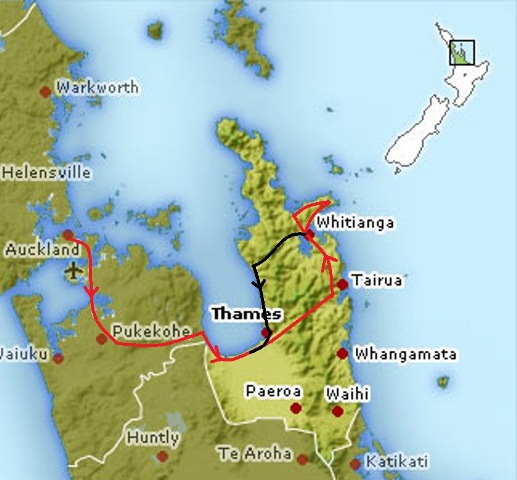
Normally you would leave for a trip whenever you are ready, or in time to check into the hotel or something. But for this trip we had to time our departure to coincide with the tide. That’s because our first stop was the Miranda Shore Birds Centre and you want to be there as close to high tide as possible because that means that the birds will be closer and easier to see.
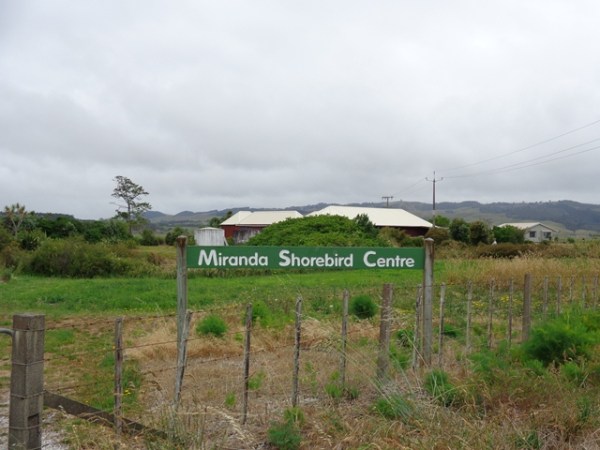
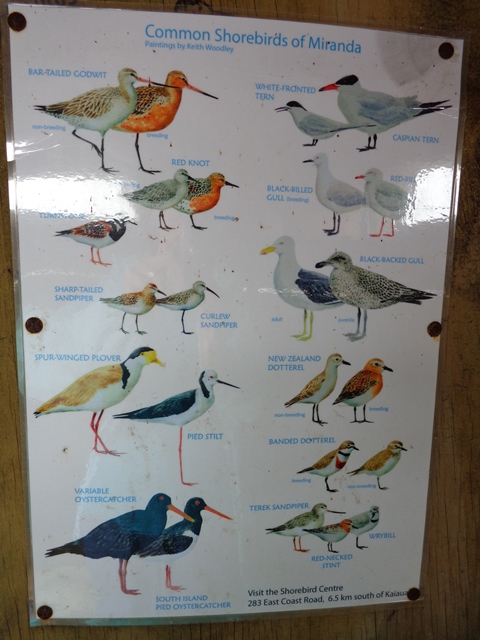
It might not look like much but the centre attracts bird experts and enthusiasts from around the world. You walk about half an hour along the shore and they have little huts with tiny windows so you can watch the birds without disturbing them. Fortunately they had a chart on the wall so we could tell what we were seeing!
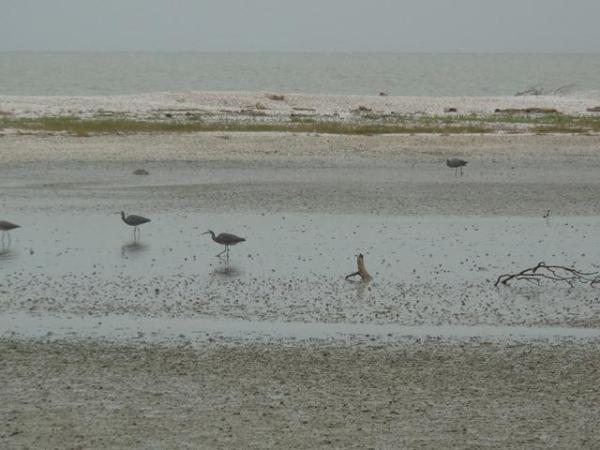
We had slightly miscalculated our arrival time and the tide was starting to go out, along with the birds, but we still got to see a lot of birds.

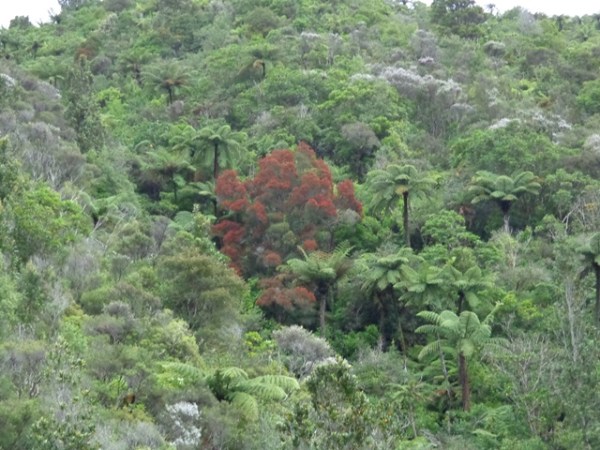
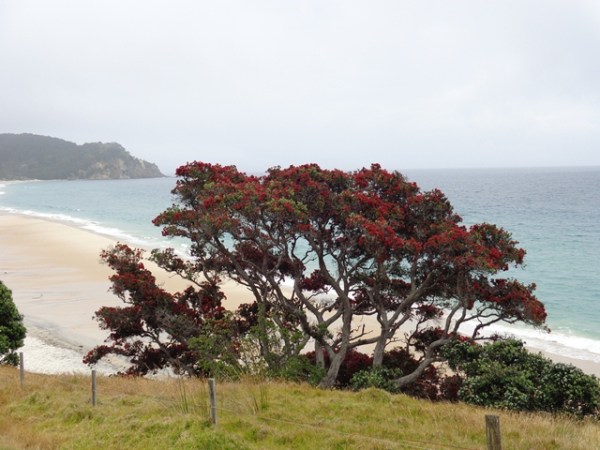
This being December, New Zealand’s favourite tree, the powhutakawa, is in bloom. In fact, people call it the New Zealand Christmas tree because all the trees turn red around Christmas. We saw them everywhere:
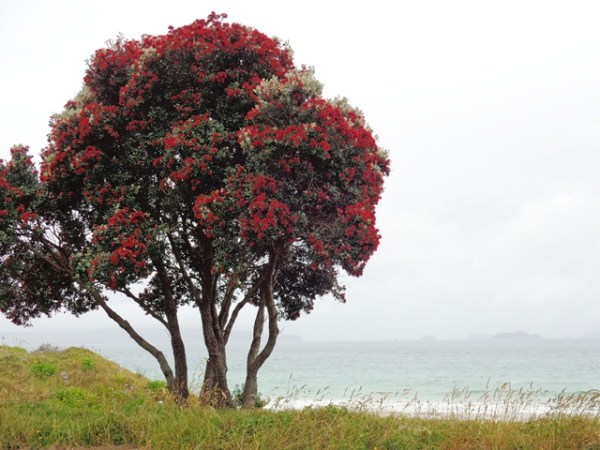
And this is how they look close up:

We continued on to Whitianga, which is on the northeast coast of the Coromandel and where we planned to stay for the next three days. By the way, in Maori, “Wh” is pronounced like an “F.” So Whitianga is pronounced Fit ee ang ah.
When we went there in 1991 most of the roads weren’t paved, or sealed, as they call them down here. Because of the growth in tourism, most of the main roads are now paved, but north of Whitianga, where we spent a lot of time, most of the roads are dirt or gravel. And they are at most two lanes!
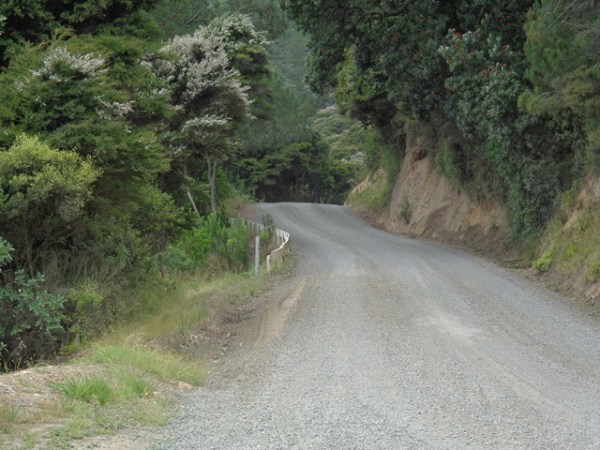
There was also lots of nice scenery.

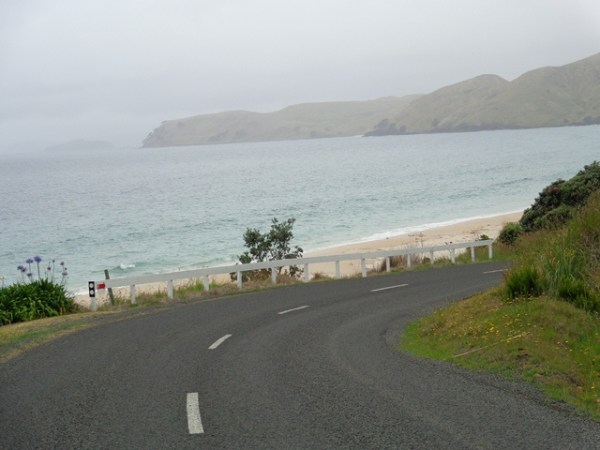
And when you are not in the woods, you are driving along the shore and can take your pick of a beach to explore.
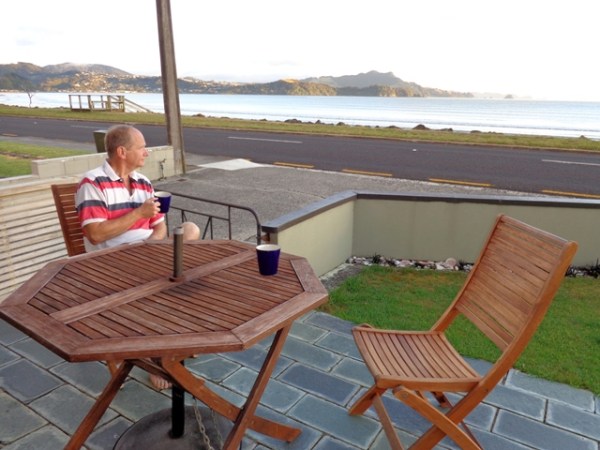
We got to Whitianga and needless to say, the town had changed quite a bit since we’d seen it last. The Marlin, where we were staying, had changed its name from the Marlin Motel to the Marlin Apartments. The owners had done a major upgrade but it still was recognizable and we got the same room with the same fantastic location and view.
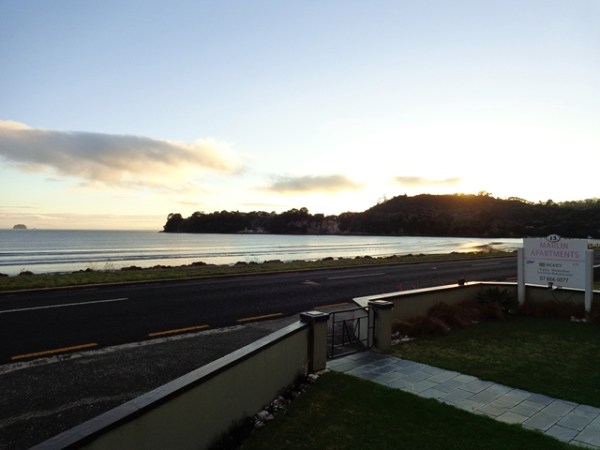
The new owner, Alistair, welcomed us in typical Kiwi fashion. Historically, these motels are family run places and the owners live on site. They are called “fully serviced,” which means that you don’t have to bring anything except food. There is a complete kitchen with pots, pans and dishes. And there will always be a complimentary carton of fresh milk in the refrigerator and some packets of tea in the pantry.
From that perspective, nothing’s changed and we quickly made ourselves comfortable. And a cup of tea!
We took a walk along the beach to explore and found that part of it had been turned into a bird nursery!

There was a family of Oystercatchers nesting and either the father or mother wasn’t very happy with our presence.

When we got back I helped Alistair with some maintenance work.
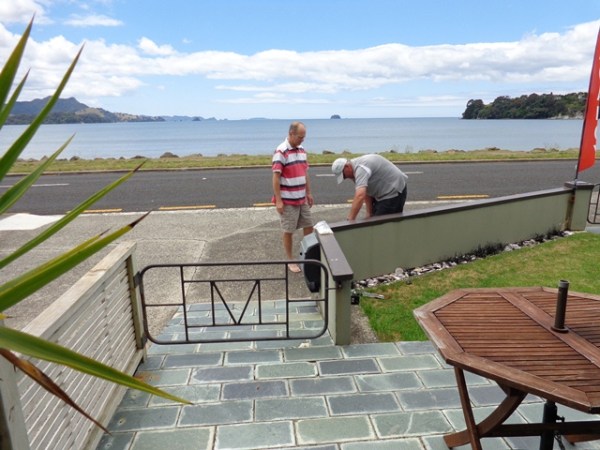
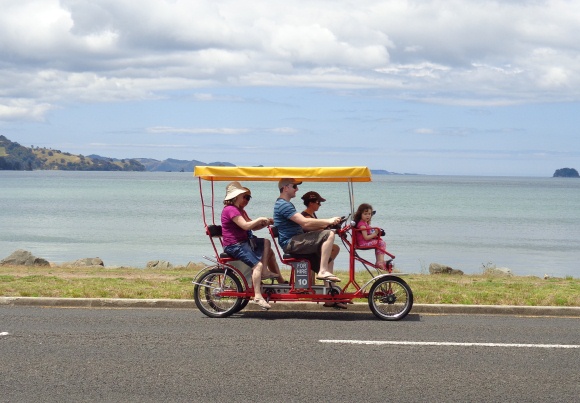
And we watched the fast paced action going by.
The next morning we did some exploring north of Whitianga and there we saw some of the best and worst of the Coromandel. During the 1800s and up until the 1930s, the peninsula was essentially deforested because it was home to the kauri, New Zealand’s largest native tree. Kauri can live for up to 4000 years and grow to unbelievable size which made them perfect for ship masts. Once the kauri were cut down, the land was either used for grazing or replanted with pine as a timber crop and every 30 years or so the pines are cut down for milling. So you do come across some less than breathtaking scenery.

The local and central governments have been encouraging the planting of native trees and there are now large areas of regenerating native forest.
As I mentioned, the drive alternated between forests and beaches. The beaches were all very inviting and if we saw a place that looked good but there was someone there, we could just drive a few minutes down the road and find a place to ourselves.


An engaging fact of New Zealand life for years has been the holiday bach, pronounced “batch.” A vacation home down here historically has not been something reserved for the wealthy, and one of the fascinating things about rural coastal New Zealand is the wonderful array of holiday accommodation you see.
The boom years a few years ago resulted in some over achievers pulling down their old cottages and putting up personal statements and it is interesting to see big modern homes interspersed among more traditional accomodations:

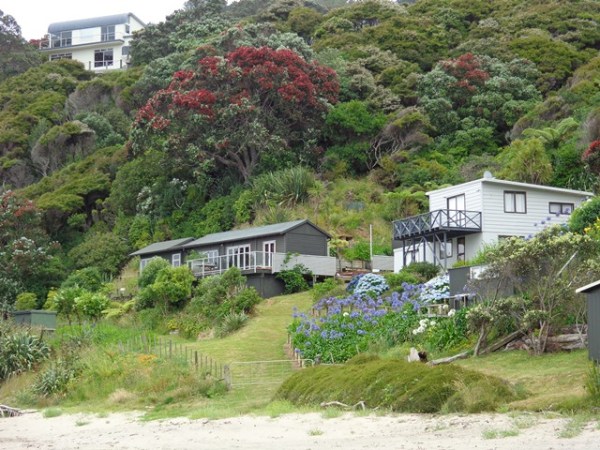
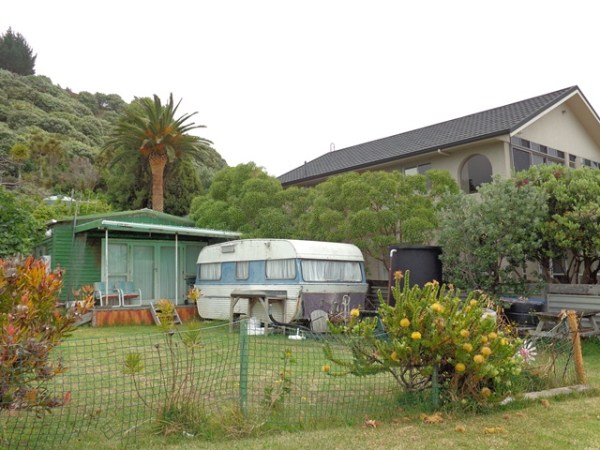

You might wonder why these people have such a big gate and no driveway.
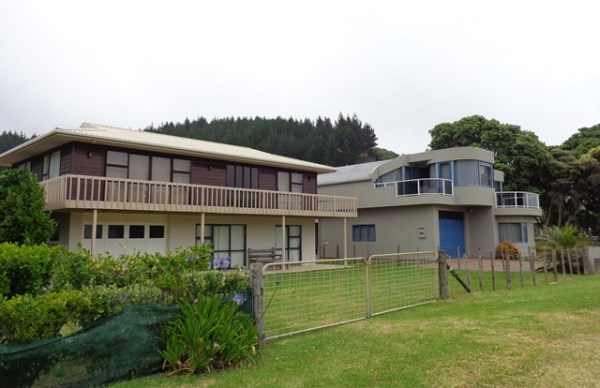
It’s because a bach requires a boat and a boat requires a tractor to get it into the water!


And there isn’t enough room for pictures of all the whimsical batches out there:

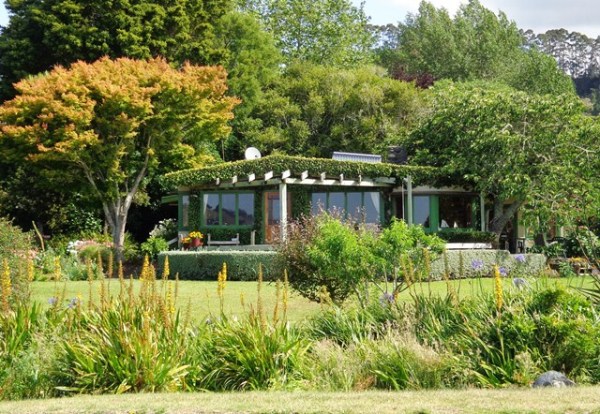
The next morning we took a walk around Whitianga Town and met a number of interesting locals. We chatted with a shopkeeper who told us that the normal population of Whitianga is 4,000 but in summer (i.e., right after Christmas) it swells to 40,000. We beat the crowds, but only just.
Here is the bête noir of any New Zealander—rented camper vans operated by tourists who come from countries where they drive on the other side of the road. I’m not sure what’s worse. Following one going at half the speed limit because they are lost or confused or both, or having to evade one coming toward you on the wrong side of the road.

As we walked along we met a woman who had moved to Whitianga after her retirement. She used to be a dairy farmer and we asked if she missed the farm. In response, she gestured at the open sea and said, “This is a lot better than getting up at five in the morning and getting shit on and kicked.”
I realized that philosophy might extend to a lot of visitors to Whitianga, and not necessarily only former dairy farmers.
We spent the rest of the day exploring some of the more popular beaches around Whitianga.
There is Cook’s Beach, allegedly visited by Captain Cook:

And this is Hahei Beach:
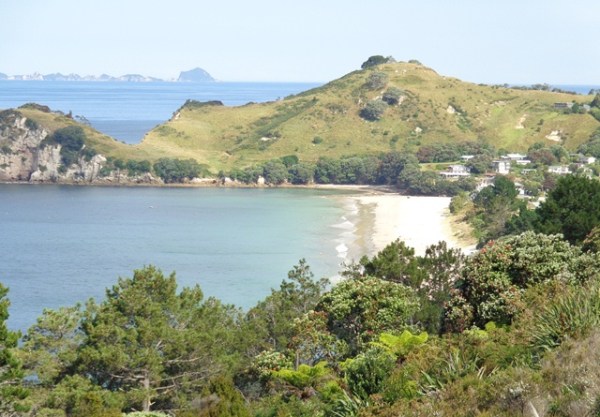
But the most unusual is Hot Water Beach. NZ is what is euphemistically called “geologically active” and there are earthquakes and volcanoes in both the North and South Islands. That also means geothermal activity and at the Hot Water Beach, an underground spring carries hot water just under the surface of the sand. You just dig a hole in the sand and if you are in the right place, you have an instant hot tub. And believe me, it’s really hot.
This was the only beach where we actually encountered other people.

I’ll spare you a picture of me wallowing, but here I am digging our pit:
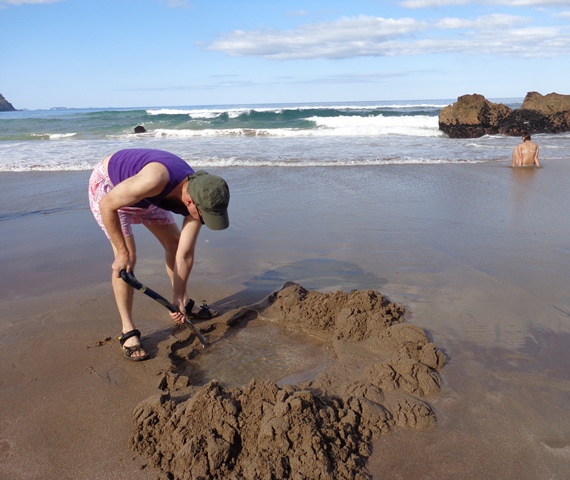
The whole process can be a little bit mercenary because as the hot water bubbles up it flows down the slope to the ocean. Enterprising engineer types construct sand dams to channel the hot water into their pools. We didn’t see any major contretemps but there were a few border disputes and discussions about water rights.

Sometimes a hole is dug too far from the spring and you get nothing but cold water. But that also can be put to good use!
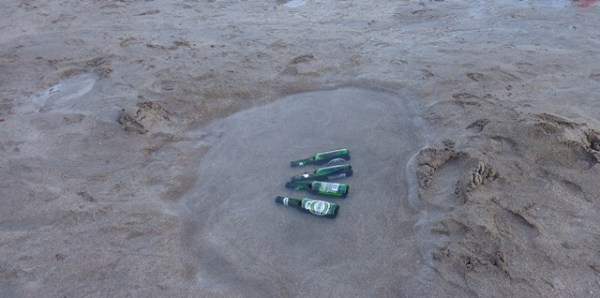
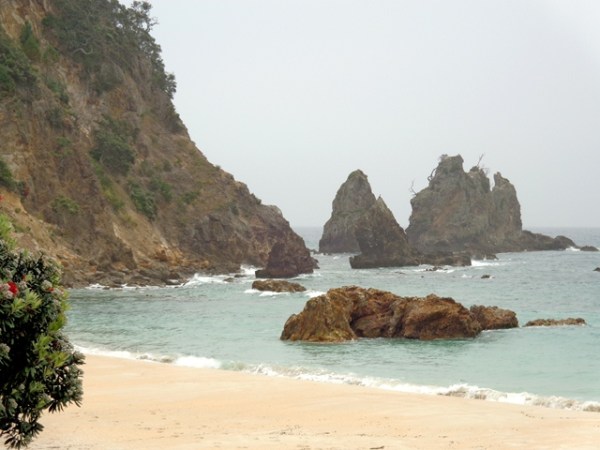
Hot Water Beach was fun, if you don’t mind a lot of sand in your togs. But we preferred to find our own quiet places where we could enjoy the beauty undisturbed.
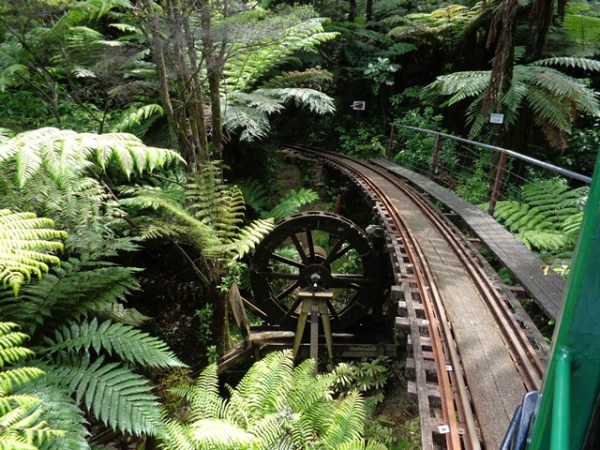
On Thursday we headed home but not before stopping in Coromandel Town to visit the Driving Creek Railway. It is an amazing place. Like many parts of the area it had been deforested up until the 1930s and then turned into farmland. Thirty years ago, a sculptor bought the land with the intention of revegetating it and developing it as an artistic centre. But he wasn’t an ordinary sculptor. He is also an engineer and a railroad buff. In order to have easier access to clay to do his sculptures, he built a narrow gauge railway up the steep slopes of the property.
Over time he has expanded the railway and it now carries visitors on a tour of the property which shows off the revegetating bush and his whimsical sense of humor. At the top of the property you get fantastic 360 degree views of the area and he has built an observation pavilion known as the Eye-Ful Tower.
A friend of ours had introduced us to the manager of the property who is overseeing the revegetation efforts. He gave us a behind the scenes tour and because our farm project is similar (but without the sculptures and the railroad) we had a lot to talk about. We also took a ride on the train.

Before we got to Coromandel Town, however, we took an unpaved road, known only as “The 309 Road.” It is unpaved and very hilly and winding and you see some spectacular sights.
Fortunately, we were about the only car around because we could take the time to explore.
We saw a sign for the Waiau Kauri Grove – a park dedicated to some of the few remaining kauri trees in the area and it is well worth the visit. It is in the middle of nowhere but beautifully maintained.
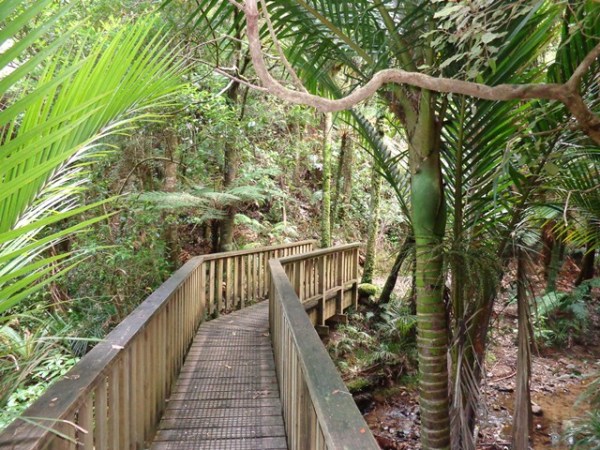
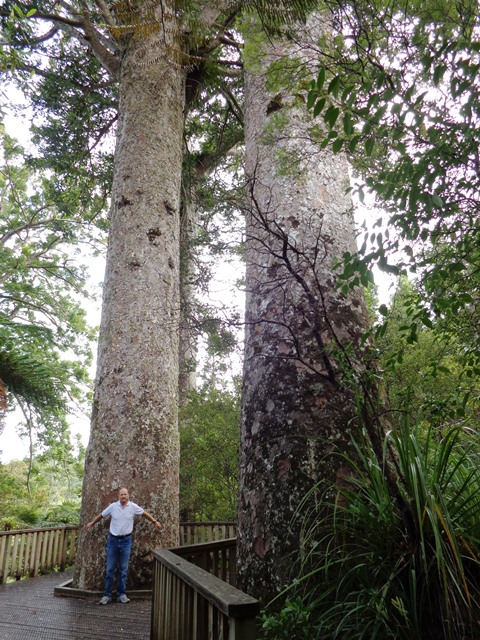
The path leads you to a grove of kauri trees that are estimated to be about 600 years old.

How big are they?
And we wrapped up the trip with a beautiful drive back to Auckland:

And as we got closer to home, we passed a solid line of cars heading out of town! It was a fun and relaxing trip. Not only was it a nice break from the work we are doing on the farm, but it also gave us some additional motivation to continue our efforts when we see the positive effects of forest revegetation.
Have a great holiday season!
Kirkus Review of Identities
I recently received the Kirkus Review of Identities and I’m happy to share it with you. It also includes a nice synopsis of the book to give you an idea of what it’s about if you haven’t read it.
There have also been a couple of reviews posted on the Amazon and Book Depository web sites but I’ve gotten a lot of reviews privately via e-mail. Many people seem to be too shy to put their thoughts out on the web, but if you’ve read the book, do please write a review on the web where you obtain the book.
Here is the Kirkus review:
TITLE INFORMATION
IDENTITIES
Stazyk, T.E.
CreateSpace (366 pp.)
$15.99 paperback, $4.99 e-book
ISBN: 978-1468146851; October 17, 2012
BOOK REVIEW
A management consultant jousts with the loonier aspects of American capitalism in Stazyk’s canny debut satire of the corporate world.
After Dave Locke is booted from the presidency of a technology corporation following a merger, he’s relieved to land a partnership at tony Quantum Consulting. Unfortunately, this avowed bastion of best business practices turns out to be filled with nincompoops. The partners are obsessed with status and extreme-sports exploits; the management committee signs off on Dave’s plans if he sprinkles them with the buzz phrase “world-class”; and clients are given the hard sell on outsourcing and layoffs, no matter what the long-term costs. (Alas, their clients are only too happy to pillage their own firms; one CEO wants to relocate his conglomerate to Panama for tax purposes.)
As a deep recession takes hold, Dave picks his way through a minefield of office politics and callous management theories. Meanwhile, his sons—Alex, a would-be actor who doesn’t want to be defined by his career, and Jim, a workaholic investment banker—debate the spiritual pitfalls of capitalism.
Stazyk’s cutting, funny tale furnishes plenty of Dilbert-esque office gags and colourful characters, including an Indian swami who turns his spiritual aura into a publicly traded corporation. The novel’s greatest creation may be Jim’s girlfriend, Jennifer, a frenzied Wall Streeter whose fussbudget consumerism reflects her hollow soul. Stazyk has written a novel that treats business as an important and absorbing subject; the author knows the terrain well and his naturalistic prose and dialogue has a nuanced subtlety that rings true.
When Dave deploys his infighting skills against boardroom boobs and tyrants, his conviction that business can be both profitable and ethical starts to seem like a believable bottom line.
An entertaining, covertly insightful satire.
I hope you get a chance to read Identities. Buy a copy for all your friends and your Christmas shopping is finished! Let me know what you think.
Happy Holidays!



 testazyk.com